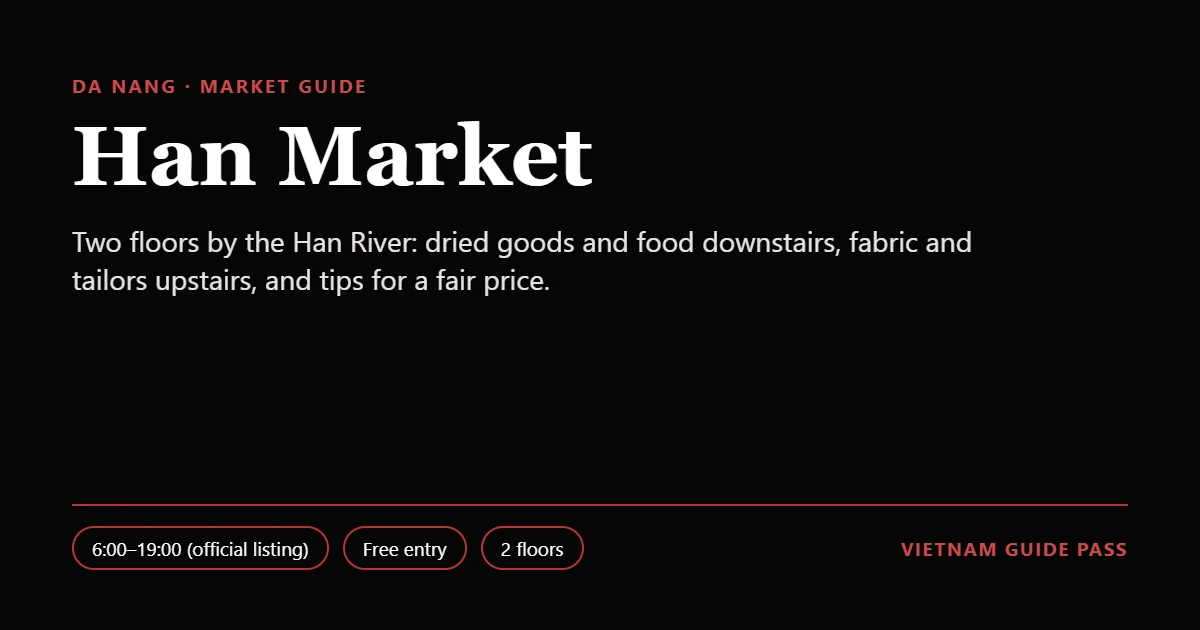
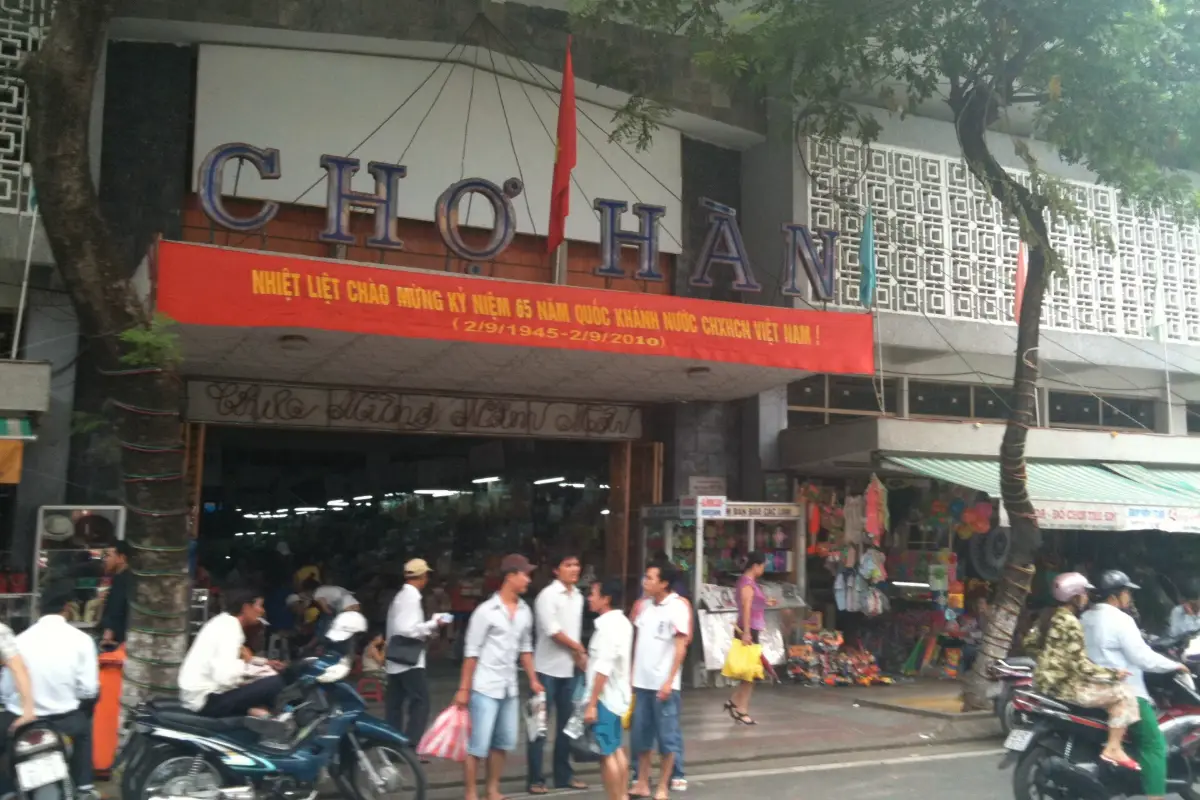
Han Market Da Nang is a two-storey market at 119 Trần Phú, beside the Han River. The official Da Nang tourism site lists opening hours of 6:00 to 19:00 daily. Entry is free.
Allow 45 minutes to an hour, or longer if you eat or order tailoring. The market is strongest for dried specialties, gifts, fabric and made-to-measure clothing.
Where Han Market Da Nang is and when it opens
Han Market Da Nang stands at 119 Trần Phú in Hải Châu, facing the Han River. The official tourism site lists hours of 6:00 to 19:00 daily, and entry is free. Allow about an hour. You can walk from the riverfront, or take a Grab from the airport, about 3 km away.
| Item | Detail |
|---|---|
| Address | 119 Trần Phú, Hải Châu, Da Nang |
| Streets on four sides | Trần Phú, Bạch Đằng, Hùng Vương and Nguyễn Thái Học, according to local press and guides. The official tourism site lists different side streets. |
| Opening hours | 6:00 to 19:00 daily on the official tourism site. Some guides list later hours. |
| Stall closing | Stalls begin packing up from about 18:00, so arrive earlier |
| Entry | Free |
| Time needed | 45 minutes to 1 hour; longer for eating or tailoring |
| Getting there | Walk from the riverfront, or Grab from the airport (about 3 km, 10 to 15 minutes) |
| Nearby | Da Nang Cathedral (about 250 to 300 m), Dragon Bridge (about 1 km) |
Information checked November 2026. Address and opening hours: Da Nang Fantastic City, the official tourism site. Other details come from Vietnamese newspapers and travel guides, and some differ between sources.
Han Market floor by floor
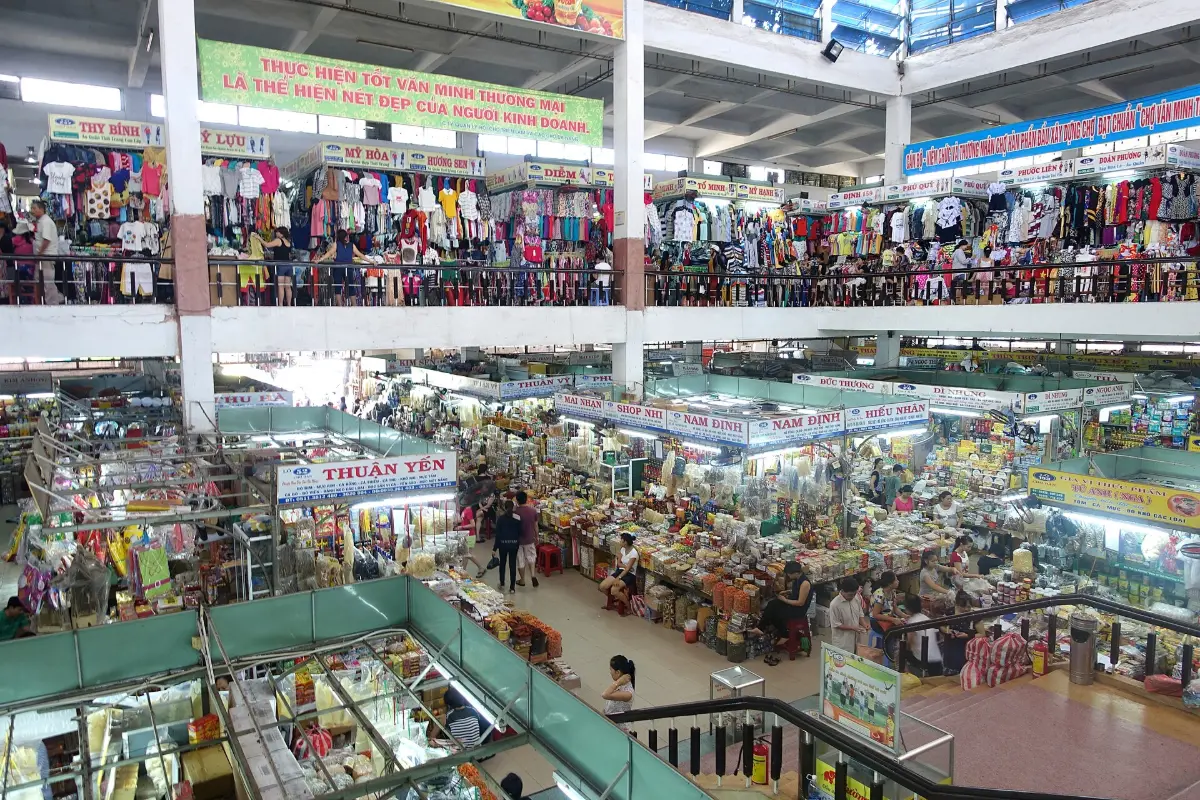
Han Market has two floors, and each has a clear role. The ground floor holds fresh food, dried goods, sauces and an eating area. The upper floor is where you find fabric, áo dài, ready-made clothing, shoes and bags. Knowing the layout saves time if you only have an hour.
| Floor | What you find | Notes |
|---|---|---|
| Ground floor | Fresh food, dried goods and sauces, eating area | Fresh food is busiest before about 8:00 |
| Upper floor | Fabric, áo dài, clothing, shoes, bags, tailors | Sources suggest mid-morning for unhurried browsing |
Sources count roughly 600 to 800 stalls, depending on the year and the method. Expect hundreds of small vendors rather than a handful of large shops.
The eating area sits on the ground floor, on the side facing Bạch Đằng street. Travel guides list dishes such as mì Quảng, bánh xèo, bánh bèo and nem lụi there. For a fuller look at eating in Da Nang’s markets, read the Con Market food guide.
What to buy at Han Market Da Nang
Han Market Da Nang is best known for dried and preserved local specialties and simple gifts. Common buys include dried squid, fermented sauces, sesame rice crackers, Robusta coffee and cashews. Non-food gifts include conical hats and áo dài. This list names products only, not prices, because published figures vary widely.
- Dried squid (mực khô), a common gift to take home
- Mắm nêm, a fermented anchovy dipping sauce, plus fermented whole anchovies (mắm cá cơm) and fermented shrimp paste (mắm ruốc)
- Sesame rice crackers (bánh tráng mè)
- Robusta coffee, a Vietnamese staple
- Cashews
- Conical hats (nón lá)
- Chả bò, a Central Vietnamese beef sausage (see the customs note in the FAQ)
In 2023, Nhân Dân reported a display point for OCOP products at the Bạch Đằng gate, with more than 100 items from 20 businesses. OCOP is the national One Commune One Product scheme. The display may have changed since then.
Tailoring and fabric at Han Market
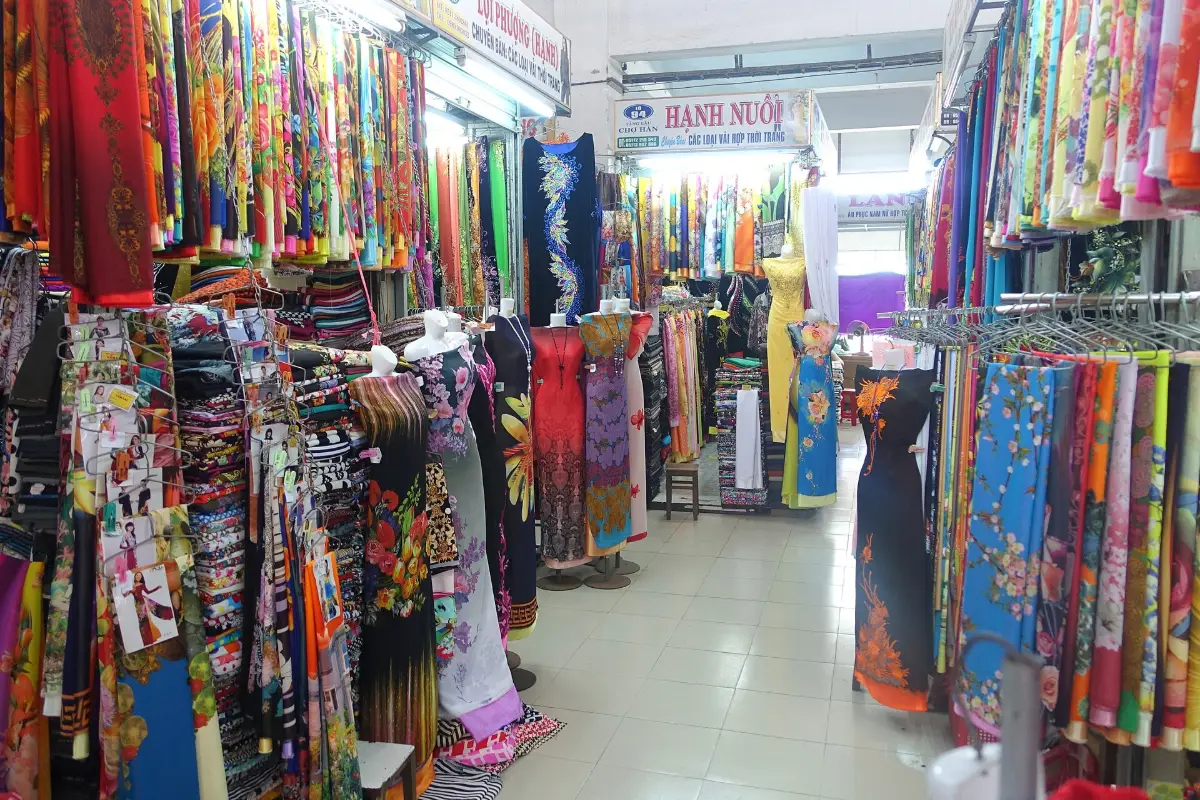
Tailors work on the upper floor, among the fabric and áo dài stalls. Turnaround times differ by source, from the same day for simple work to one or two days. Settle the details before you pay a deposit, and plan for at least one fitting. The checklist below covers what to agree.
- Fabric: confirm the type and the amount to be used
- Design: bring a photo or a garment you want copied
- Total price: confirm one figure that covers fabric and labour
- Deposit: agree the amount and ask for a receipt
- Fitting and pickup: agree both dates, and leave room for one adjustment
Write these terms down, or save them as a note on your phone. A written record helps if the finished garment differs from the agreement. Order early in your stay, not on your last day.
How to get a fair price
Food and many dried goods carry posted prices, so bargaining there is uncommon. Bargaining is normal for clothing and souvenirs. Sources suggest very different discounts, so do not rely on a fixed percentage. Compare two or three stalls, ask the price before you handle goods, and walk on politely if it does not suit you.
In January 2026, Tiền Phong reported that Da Nang’s traditional markets, including Han Market, sold goods at openly posted prices. One vendor said squid, fish, shrimp and sweets were selling well.
- Carry cash in small notes, since change can be hard to find
- Ask to see the scale for goods sold by weight
- Keep your bag zipped and your phone in a front pocket in busy aisles
Han Market’s history in brief
The official tourism site says Han Market began as a small trading place in the French colonial period and dates the market to the 1940s. Saigon Giai Phong newspaper says it was rebuilt in 1989. Some sources give a reopening date of 29 March 1991, so published dates differ.
Saigon Giai Phong reported a cost of more than 8.1 billion VND (about US$310,000) when renovation work began in September 2022. In April 2023, Nhân Dân reported a new gate facing Bạch Đằng street. The old fruit and vegetable hall had become a food area.
Today it is one of four Grade 1 markets managed by Da Nang’s Department of Industry and Trade. The others are Con Market, Đống Đa and the Hòa Cường wholesale market, according to Báo Văn hóa in 2026.
Han Market vs Con Market
Han Market suits a first visit focused on gifts, fabric and tailoring, close to the river. Con Market is the better choice for a local meal. The two are about 1 km apart along Hùng Vương street, roughly a 12 to 15 minute walk. Our Con Market food guide compares the two markets in more detail.
Han Market and Da Nang Cathedral on the audio guide
The Da Nang – Hoi An Guide Pass includes three audio stops at Han Market. Three more at Da Nang Cathedral, a few minutes’ walk away, make the two an easy pair for one morning. Audio plays in English, Vietnamese, Chinese and Korean. See all 21 Da Nang and Hoi An sites on the destination page.
FAQ
Han Market is named after the Han River, which runs beside the city centre, according to the official Da Nang tourism site. The Vietnamese name is Chợ Hàn.
It gets very busy at peak times. Tiền Phong reported more than 11,000 visits a day over the 2026 New Year holiday, about three times a normal day. For a calmer visit, avoid public holidays.
Rules depend on your destination country and your airline. Many countries restrict dried seafood and meat products such as chả bò. Fish sauce is a liquid, which affects carry-on limits. Check your country’s customs rules and your airline’s baggage policy before you buy.
Get the Da Nang – Hoi An Guide Pass
The Da Nang – Hoi An Guide Pass costs from 149,000 VND (about US$6) for one day, including VAT. Passes run from one to four days and play in your phone browser, with no app to download. They cover audio commentary only, and entry tickets are not included.
Get the Da Nang – Hoi An Guide Pass. Other questions about the pass are answered on the Vietnam Guide Pass FAQ.